
2 hr
Cape May Morning Dolphin Cruise
Early morning wildlife cruise aboard a 110-foot vessel with breakfast and coastal sightseeing
Reserve
Hand-picked by our editors — only the best 5 experiences from 47 reviewed.
Verified partners for every tour, free cancellation where available, and instant confirmation on every booking.
2 hr
Early morning wildlife cruise aboard a 110-foot vessel with breakfast and coastal sightseeing
Reserve
2 hr
Evening boat tour combining dolphin sightings, coastal landmarks, and casual dining aboard
Reserve
2 hr
Two-hour evening voyage along Delaware Bay with dolphin spotting, coastal views, and complimentary food
ReservePrices from verified partners. Availability updates in real time at checkout. Free cancellation policies apply where shown.
The landmarks, rooms, and views travelers on this tour remember — all visible on a single visit.
This historic 1859 beacon offers views of the coastline and surrounding wildlife habitats.
The primary search area for bottlenose dolphins and various whale species.
A climate-controlled indoor space providing comfort during the boat cruise.
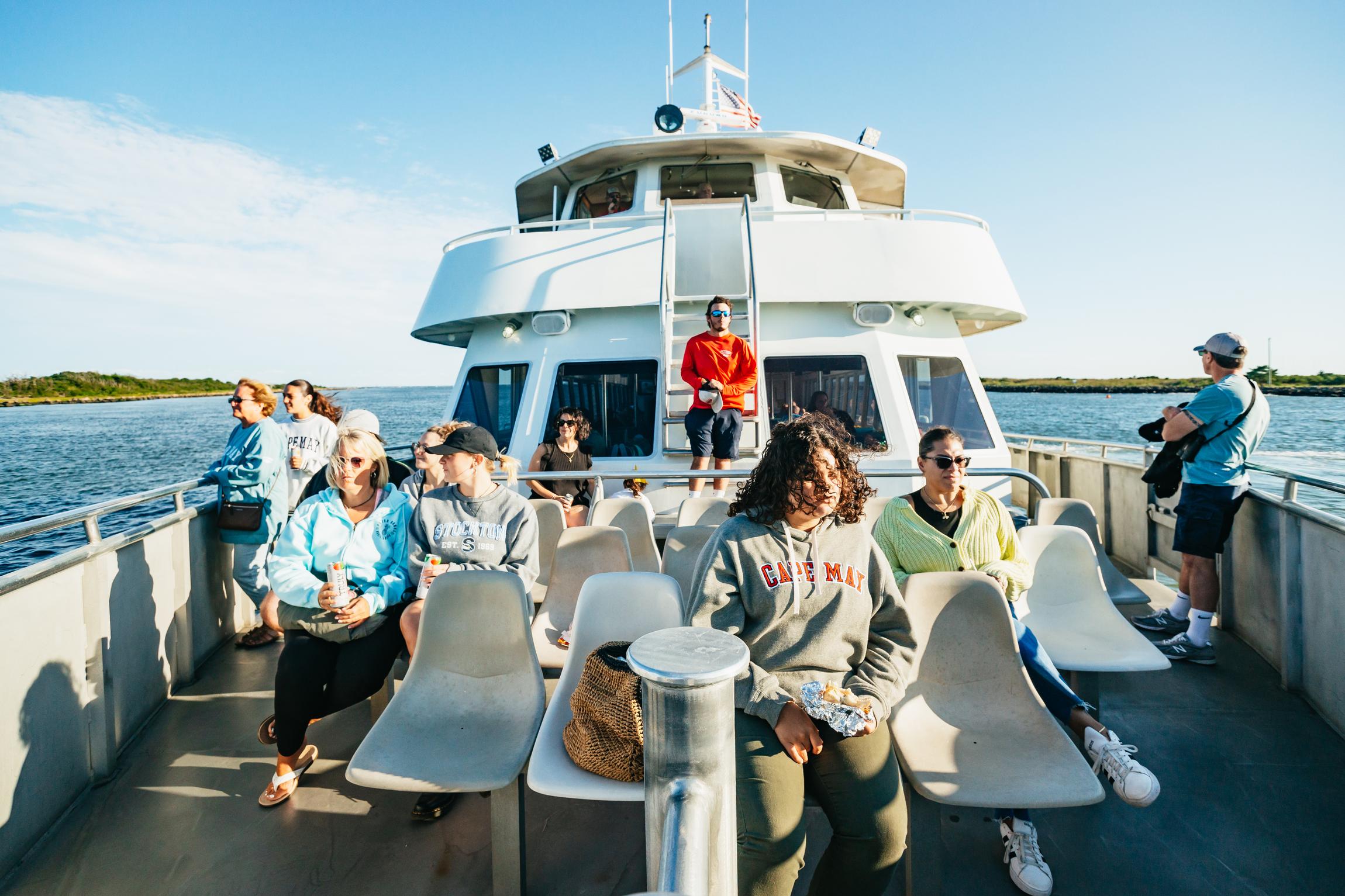
Multiple levels with over 350 feet of rail space for optimal wildlife viewing.
Onboard area where marine biologists collect data on local cetaceans.
Dedicated dolphin tours focus on high-frequency sightings in calm, near-shore waters, whereas combined whale and dolphin excursions offer an expansive search into deeper Atlantic habitats. Most visitors seeking specific marine mammal encounters prefer the consistent local sightings found on a cape may dolphin cruise.
| Feature | Top pick Dolphin Cruise | Whale/Dolphin Cruise |
|---|---|---|
Primary Wildlife Focus |
Atlantic Bottlenose Dolphin | Whales and Dolphins |
Trip Duration |
1.5–2 hours | 2.5–3 hours |
Wildlife Sightings |
High frequency dolphin | Variable species diversity |
Target Audience |
Families with children | Wildlife enthusiasts |
Activity Intensity |
Low — relaxed viewing | Moderate — offshore travel |
| See tickets → |
Verdict: Choose the specialized cape may dolphin cruise tour if you prioritize frequent, reliable sightings of local pods, or select the combined excursion to increase your chances of spotting larger migratory species when booking your cape may dolphin cruise tickets.
Choose your ticket, select your date, and reserve in under two minutes. Secure checkout handled by our verified partner.
Instant confirmation by email, with a mobile voucher you can save offline. No printing, no queuing at a collection desk.
Arrive at the entrance, show your voucher on your phone, and walk in. Most tickets include priority or skip-the-line access.
Practical details for your visit straight from our verified partners — hours, access, rules, and how to get there.
Casual and comfortable maritime attire is recommended. Bring a light jacket or windbreaker as temperatures can drop significantly while at sea.
Small personal bags are permitted. All luggage must be left ashore as the space on board is limited.
Photography is encouraged, but maintain a respectful distance from wildlife. Large professional camera tripods may be restricted due to deck space.
The vessels are equipped with ADA-compliant boarding ramps for easier access. Staff are available to assist guests with mobility requirements upon arrival.
Children are welcome and those 6 and under sail free with a paying adult. The family-friendly tours provide an educational look at marine mammals.
Outside food and non-alcoholic drinks are permitted, though coolers are not allowed. A full galley and bar service are available on board for additional snacks and refreshments.
Best time to go, insider tips, nearby landmarks, and the cancellation fine print — flip through to skim what matters to you.
Flexible, no hidden fees.
All ticket sales are final and non-refundable unless the captain cancels the trip due to severe weather. If a cancellation is issued, a full refund is possible within 30 days.
Cape May's dolphin population peaks between May and October, when Atlantic bottlenose dolphins follow baitfish schools into the shallow waters between the Delaware Bay and the Atlantic Ocean. The channel between Cape May Point and Wildwood Crest becomes a natural feeding corridor, with pods surfacing within fifty yards of tour vessels on favorable tides. Commercial dolphin-watching operations launched here in the early 1990s, following the success of whale-watching charters that had operated from the same Wilson Drive marina since 1976. By 2000, the cape's fleet had shifted predominantly to dolphin-focused itineraries, responding to visitor demand for reliable sightings over the more sporadic offshore whale encounters. The cape's position at the southern terminus of the New Jersey coastline creates a convergence zone where cooler bay water meets warmer coastal currents. This thermal boundary attracts Atlantic herring, menhaden, and weakfish—primary prey species for bottlenose dolphins, which travel in matrilineal pods of six to twelve individuals. Researchers from the Marine Mammal Stranding Center in Brigantine have photo-identified more than two hundred individual dolphins in Cape May County waters since 2003, documenting seasonal residency patterns and calf recruitment. Dorsal fin notches and pigmentation scars allow scientists to track the same animals across multiple summers, with some females returning annually to calve in the protected shallows near Sunset Beach. Morning departures align with the incoming tide, when dolphins hunt collaboratively near jetties and channel markers. Captains navigate within a quarter-mile of Poverty Beach and the Concrete Ship, a partially submerged World War I-era tanker that serves as an artificial reef and frequent dolphin waypoint. Sunset cruises extend farther into the bay, timing the return leg to coincide with the evening light over Cape May Point Lighthouse. Both itineraries operate under federal marine mammal approach guidelines, maintaining a hundred-yard buffer unless animals voluntarily close the distance. Onboard naturalists provide species identification and behavioral commentary, distinguishing traveling behavior—steady, rhythmic surfacing—from foraging dives marked by erratic patterns and sudden directional changes. The cape may dolphin cruise industry operates year-round, though sightings decline sharply after November when water temperatures drop below fifty-five degrees Fahrenheit and most pods migrate south. Winter cruises pivot to harbor seal observation and offshore seabird surveys, but the summer dolphin season remains the region's primary marine ecotourism draw, with vessels departing multiple times daily from Memorial Day through Labor Day.
"Researchers have photo-identified more than two hundred individual dolphins in Cape May County waters since 2003, documenting seasonal residency patterns and calf recruitment."
A step-by-step walkthrough of the visit — what you'll see, how long each stage takes, and the details that matter.
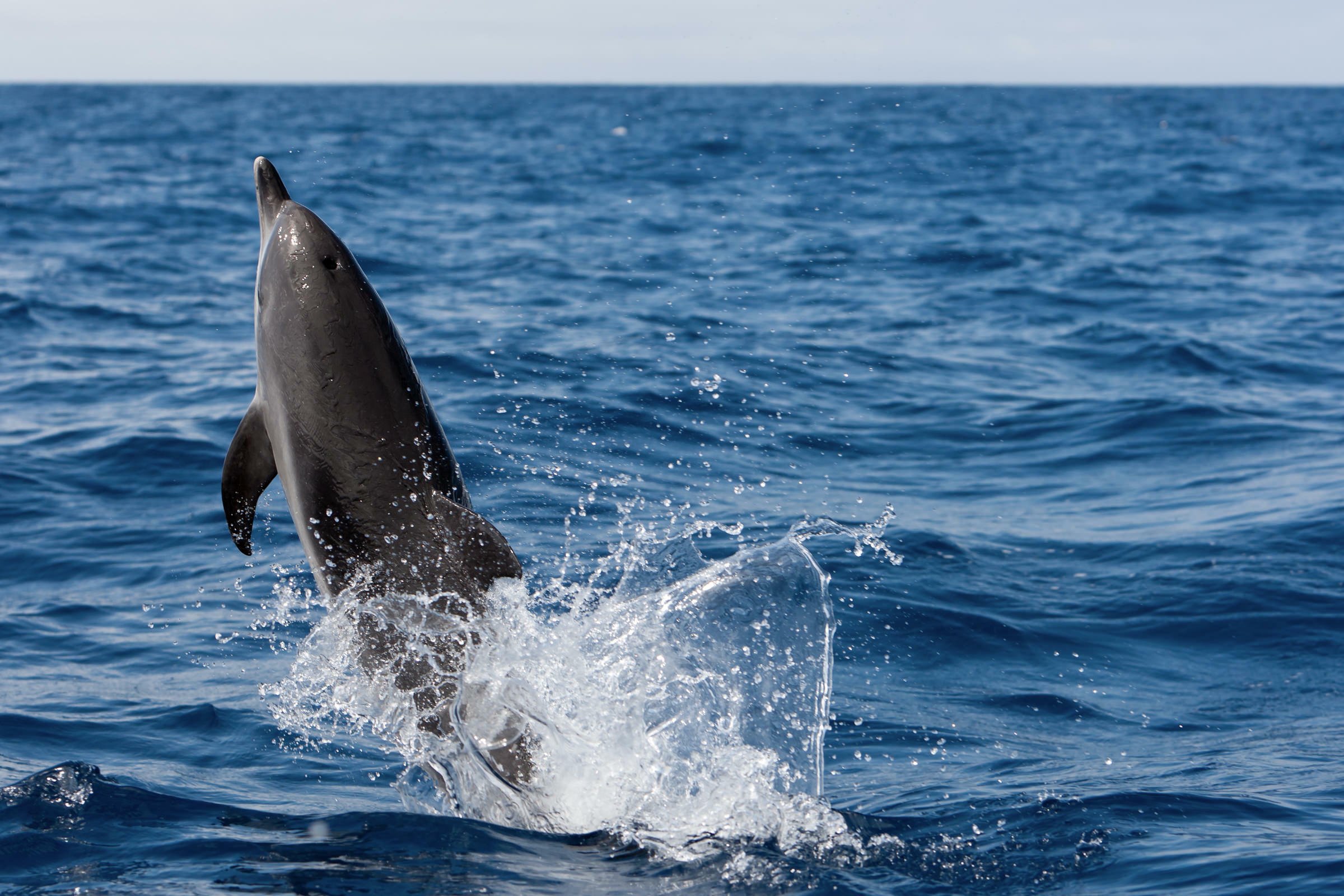
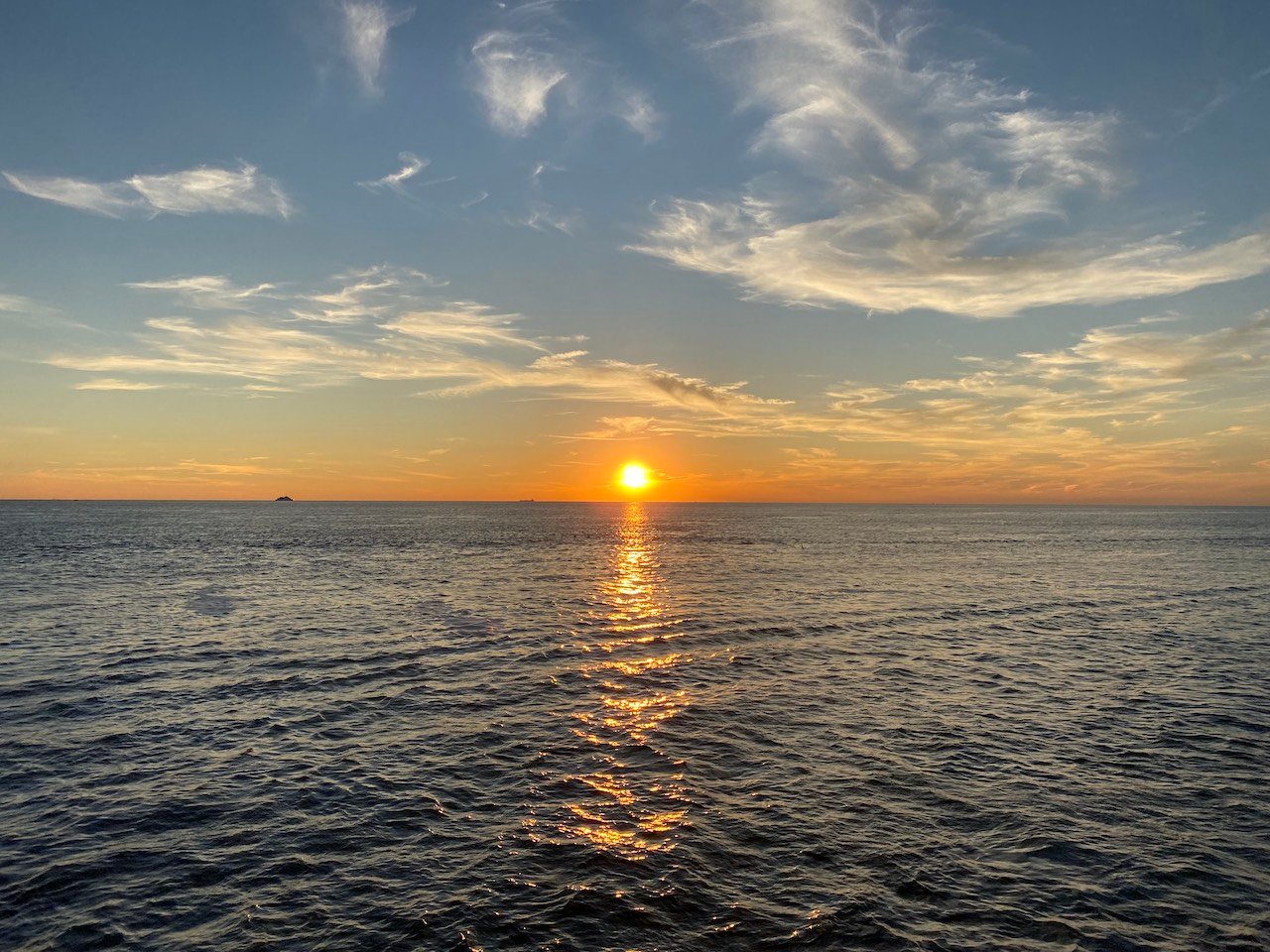
You board at the Wilson Drive dock thirty minutes before departure, stepping onto a covered vessel with open side decks and a upper observation platform. The captain briefs the route as the boat clears the harbor breakwater, heading southeast toward the confluence of Delaware Bay and the Atlantic. Within fifteen minutes you pass the Concrete Ship wreck, its rusted bow visible above the waterline, and the naturalist points to a pod surfacing two hundred yards off the starboard beam. You move to the rail as the boat slows, watching three adults and a calf arc in synchronized rhythm, their dorsal fins cutting the surface in clean intervals. The boat follows at a parallel course, and the dolphins shift closer, riding the bow wake and surfacing within arm's reach of the forward deck. You count six animals now, their gray backs mottled with scars and barnacle marks. One juvenile breaches fully, twisting mid-air before splashing down. The naturalist identifies a notched dorsal fin she has documented on five previous seasons. After twenty minutes the pod veers toward deeper water and the captain continues south along the coastline, passing Cape May Point Lighthouse and the stone jetties where cormorants cluster on the rocks. If you booked the sunset departure, the return leg frames the lighthouse in amber light as the boat re-enters the harbor an hour and forty minutes after departure.
The office is open daily from 09:00–20:00 for your cape may dolphin cruise inquiries. Children aged 6 and under sail free on our marine mammal tours. You are welcome to bring snacks, but please note that coolers are prohibited on the cape may dolphin cruise. Well-behaved, leashed pets are welcome to join your cape may dolphin cruise adventure. If your cape may dolphin cruise is cancelled by the captain, you may request a refund within 30 days. Please arrive between 09:30–18:00 to ensure enough time to check in for your cape may dolphin cruise. Our boats feature ADA-compliant boarding ramps to assist guests during the cape may dolphin cruise. Wear layers and comfortable shoes for your cape may dolphin cruise, as it can be breezy on the water. Yes, photography is welcome during your cape may dolphin cruise tour to capture the wildlife.
Please contact us for more information.